HOW TO INSTALL A CEILING FAN EQUIPPED WITH A DC MOTOR


Installing any ceiling fan is usually a very simple process, and it is just as simple when installing a ceiling fan that comes equipped with the more energy efficient DC motor. However, there are some warnings one should know before proceeding and attempting to connect a DC fan to their power source.
CONNECTING A STANDARD AC FAN IS A LITTLE DIFFERENT
In the past, when fans all came equipped with a standard AC motor, many electricians would wire up a ceiling fan without feeling the need to turn off a circuit breaker, or even a wall switch that sends power to the fan.
Although, it is always a good idea to do so, a seasoned electrician understands that as long was they only work with one wire at a time, and the other wires are capped, they aren’t really going to have to worry about any sort of electrical shock. They know for a shock to happen they’d have to be touching the metal part of the wire they are working with, while at the same time grounding themselves on something else metal to complete the circuit. Therefore, many times electricians may simply hold the wire by the insulated part (colored coating) and connect one wire at a time. After all, for standard fans we are only talking about one hot wire, one neutral wire, and one ground wire.
Even remote controlled traditional ceiling fans with an AC motor is not much different. The only difference is there is usually a remote receiver that separates the three fan wires from the power wires at the ceiling. On one side of a remote receiver there is usually a blue, a black, and a white wire. Coming from the top of the fan is the same three color wires. One only needs to simply connect those wires together by their color. Then, on the other side of the remote receiver there is always a black wire and a white wire (separate from the side that three black, white, and blue wires are found) and these two wires simply connect to the black wire and the white wire coming out from the ceiling.
Whether connecting an AC fan with or without a remote, once these wire connections are completed you can test the fan for operation with or without the blades installed.
NEVER TRY TO WIRE A DC FAN WITH THE CIRCUIT BREAKER ON
A DC ceiling fan is more sensitive when connecting wires, making it a must to have the power turned off before beginning any of the wiring process. It does not matter how comfortable an electrician feels around power, a DC fan is very, very sensitive, and the power must be turned off while making wiring connections. Any slight arc of power or surge during the process can, and probably will, damage the DC ceiling fan’s remote receiver. Therefore, power being off before starting the installation is crucial. The reason is that the receiver also contains the converter that will change the home’s AC power over to a DC current before that current gets to the fan motor. Due to the complexity of the task the receiver is required to do, the circuitry is more sensitive and care should be taken when wiring.
Once power is off and the wiring process has begun, wiring a ceiling fan with a DC motor is really no different from wiring a fan with an AC motor. It doesn't matter if it's an indoor or outdoor dc ceiling fan, the wiring process will be the same.
Some DC models have the receiver pre-wired to the motor and only a black and a white wire need to be connected, along with the ground wire at the ceiling source. These are way more simple to wire than even a standard ceiling fan. It doesn’t matter if the fan does or does not have a light, you’ll still only need to connect the hot wire, the neutral, and the ground. It’s so simple it confuses some electricians, especially if they haven’t seen a fan like this before.
Others, such as Minka Aire fans, have a separate remote receiver, which wires up exactly like an AC fan remote receiver does, except sometimes the color wires on the fan side of it may be a little different. No matter the color of wires, you will still connect the wires based on matching the color from the receiver to the color on the fan side. Just make sure the black and the white wires designed to be connected to the ceiling wires are connected to the ceiling wires, and not accidentally connected to the same black and white wires coming from the fan motor. These wires will be clearly labeled on the receiver, and as long as one is paying attention they are easy to recognize.

AFTER WIRING IS CONNECTED TO A DC CEILING FAN
Once all wires are connected, proceed to install the blades. Unlike old fashion AC ceiling fans, do not attempt to turn on a DC fan before installing the blades and being sure the full assembly is complete. This is due to the set up process a DC fan requires to operate correctly and the way the motors themselves are designed. Most DC fan motors will not operate without it first sensing the weight of the blades.
Others require a calibration process that takes up to 7 minutes, during which time the motor sets up based on the size and weight of the blades installed. This is especially true with big ceiling fans that use the same motor with varying blade span options. Attempting to operate the fan before the blades are installed may damage the motor permanently. Therefore, please follow all directions closely that are included with the fan! Do not skip steps! Your new DC fan will work flawlessly if you let it calibrate correctly and/or pair the remote correctly.
GOOD JOB! YOUR FAN IS READY FOR YOUR ENJOYMENT
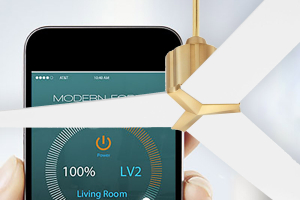
Once you are finished installing your new DC ceiling fan, you will have a ceiling fan installed that is far superior to any ceiling fan that uses a traditional AC motor. You will have far more cubic feet per minute of airflow per watt of electricity than any AC ceiling fan is capable of. You will have more speed settings and a great remote that will reverse you fan at the press of a button. Depending upon the DC ceiling fan you’re installing, you may even have smart features such as, operation from a smart phone or tablet, and possibly even voice commands through Amazon Alexa and the likes.
After reading these important tips and installing your new modern DC ceiling fan, it’s time to kick your feet up and relax more comfortably in your living space. Enjoy!
Name Brand Ceiling Fans at Modern Fan Outlet
Ceiling Fans by Design Categories
| MODERN OUTDOOR TRADITIONAL SMALL |
LARGE NAUTICAL ORNATE KIDS |
TROPICAL DOUBLE MOTOR ORNATE CLEARANCE |
FANS WITH LIGHTS RUSTIC MISSION |