Ceiling Fan Reviews: How to Find the Best Product
Ceiling fans can add comfort to a room, year-round, by circulating the air. They can reduce energy costs and save you money.
But, not all ceiling fans are created equal. There is a wide range of options to choose from in terms of size, functionality, and quality. It can be difficult to know where to start.
Most people limit their ceiling-fan research to style and price. Sure, getting a fan that looks great within your budget is important. But the most crucial features that separate great fans from mediocre ones are not visible.
That’s why, when you are reading ceiling fan reviews, it’s a good idea to dig a little deeper into what kind of product you are getting. Here are a few things to look for that will help you select, not just a great looking fan, but one that will produce exceptional results and last a long time.
Ceiling Fan Basics
Ceiling fans come in all shapes and sizes, and with a diversity of features. You can select a fan that includes lighting, or without. Each room of your home is unique. The first step to finding the right ceiling fan is determining what you want to get out of it.
Of course, style is an important aspect of a ceiling fan and could be an easy way to start narrowing down your choices. You want it to match the style of your room and your personal tastes.
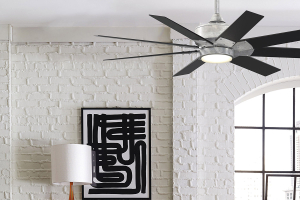
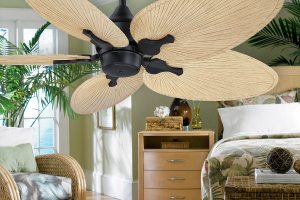
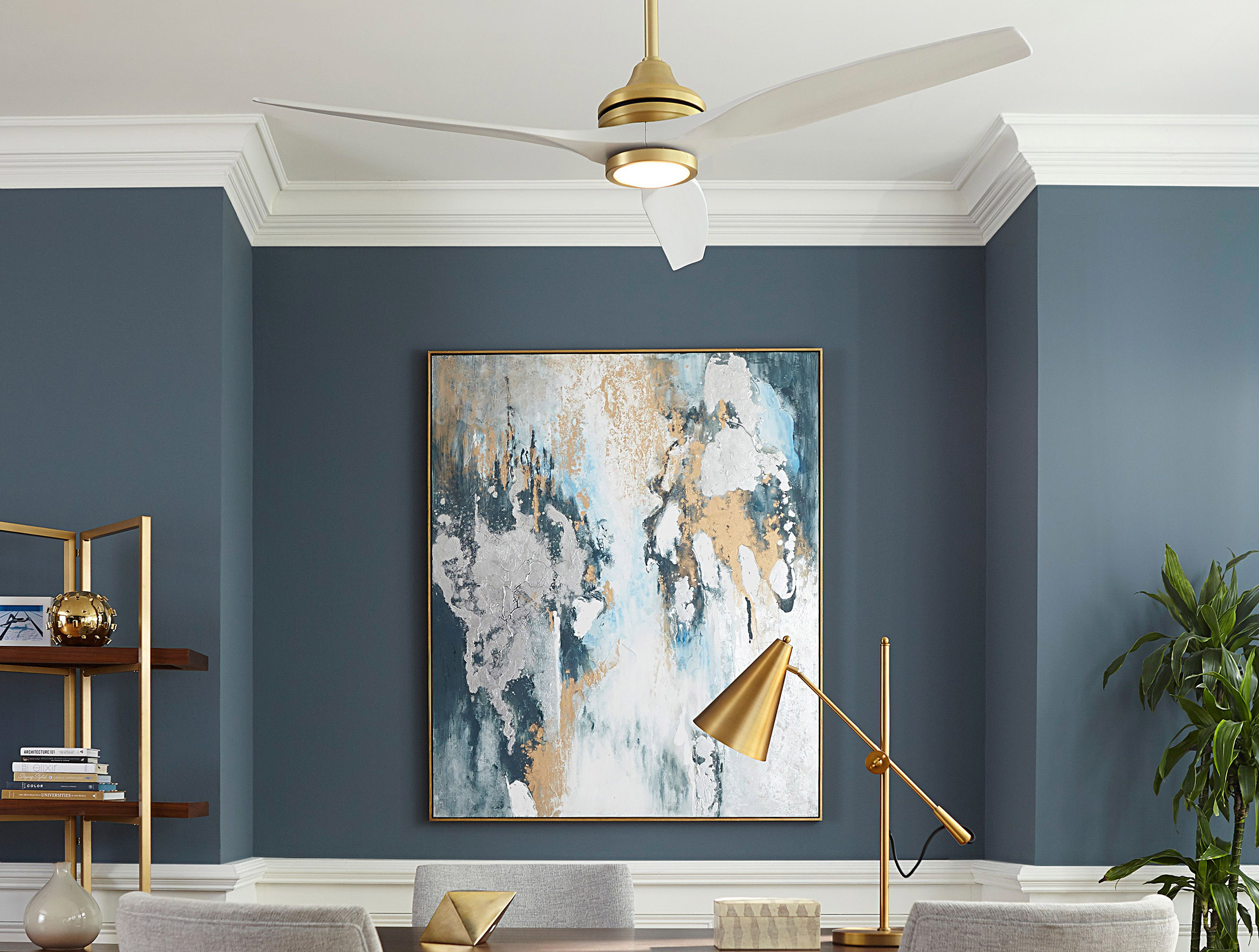
Fortunately, ceiling fans come in a variety of styles, from classic to modern. You can get blades in different shapes, like oval or leaf. Blade finishes are often available in cherry, maple, oak, and in almost any color. And you can find many different motor-cover finishes, including brass, bronze, or pewter.
Another basic thing to consider is whether you plan to use the fan for lighting in a room, and to what extent. If illumination is not a priority, ceiling fans without a lighting kit can have a cleaner, simpler look.
You can purchase fans with additional, modern technologies. Remote controls can be very handy. Also, some fans come equipped with sensors that trigger when someone enters or leaves a room.
Almost all ceiling fans have different speeds and the ability to reverse direction, which is necessary for winter use. But, this is something you will want to double-check on if these features are important to you.
Function
Beyond aesthetics, you want to consider the ceiling fan’s functionality. Ceiling fan airflow, or “flow rate,” is a measure of how much cubic feet of air it can circulate per minute (CFM) it is in operation. It is a simple calculation of the fan's output.
Bigger fans push more air. But, if efficiency is important to you, you don’t want to get a fan that is overkill for a particular room. Nor do you want one that is too small and delivers inadequate output.
For a standard bedroom of 120 to 200 square feet, a 3,000 to 4,000 CFM fan would be suitable. Larger rooms of more than 300 square feet would require somewhere in the ballpark of 5,000 to 9,000 CFM in a ceiling fan. For much larger spaces, you may consider installing two fans, or one extra large ceiling fan that can push well over 12,000 CFM of airflow.
But there are a number of things that affect CFM, including blade size, design, and the motor. Typical ceiling fan blades range from 26 to 62 inches.
A 42- or 44-inch fan is sufficient for rooms under 120 square feet. For larger rooms, like living rooms or outdoor spaces, a 60-inch or larger fan may be more suitable. Also, the blade's pitch, or the angle of the blade’s tilt, can impact CFM.
The motor is the most important component of a quality ceiling fan. It is what determines how efficiently a fan can move air throughout a room, and how quietly it does so. The size motor on a fan determines the “rotations per minute” (RPM) of the blades.
Energy Efficiency
While CFM will tell you the sheer amount of airflow you will get out of a fan, how efficiently it does so is another matter. According to the U.S. Department of Energy, during warmer months, running a ceiling fan can allow you to raise your thermostat four degrees without sacrificing comfort in a room.
Ceiling fans can save money during the winter as well, by pulling cold air from the center of the floor and pushing warm air around the ceiling out into the room. It can make a difference of as much as three or four degrees.
It is easy to see how this can translate to energy savings year-round. It is one of the leading reasons people install ceiling fans in their homes. One way to measure energy efficiency is to look at the ceiling fan’s wattage. This is the basic measurement of how much energy the fan will use.
To go a step further, you also may consider CFM per watt. Reputable dealers will do this calculation for you and make it available for each product. It will give you a sense of how much output from the fan you will get for the amount of energy used.
Tackle Ceiling Fan Reviews
Now you are ready to use the basics above to navigate ceiling fan reviews. You can buy a cheap fan at almost any store that sells home furnishings or appliances. But why go to the trouble of installing a low-quality product that, after minimal usage, may break, start wobbling, or become noisy?
With a little research, you can find a product that will look great, perform well, and last a long time. The brand can be a good indicator of quality. Look for retailers that provide a wide selection of styles and sizes, but also one that carries reputable brands.
A prominent ceiling fan dealer will make the information above readily available to you and can provide further details about their products. This can go a long way to assist you in selecting the right one for your home. Contact us today to find the perfect one!
Quality Ceiling Fan Brands at Modern Fan Outlet
Choose A Category to View Different Ceiling Fan Design Choices
| MODERN OUTDOOR TRADITIONAL SMALL |
LARGE NAUTICAL ORNATE KIDS |
TROPICAL DOUBLE MOTOR ORNATE CLEARANCE |
FANS WITH LIGHTS RUSTIC MISSION |